Palm Oil & Conscious Beauty: Striving For Real Change
Britt JamesFor a long time, palm oil has been viewed as one of the “bad” ingredients in beauty and consumer goods - and for good reason. But underneath the headlines and social media soundbites, the conversation is actually far more nuanced than a simple good-versus-bad narrative.
What many people don’t realise is that palm oil and palm-derived ingredients are already deeply woven into everyday life - appearing in everything from skincare, makeup and shampoo to packaged foods, cleaning products and household essentials.
In fact, palm-derived ingredients are estimated to be present in around 70% of beauty products used daily worldwide.
The reality is, most of us are already interacting with palm-derived ingredients every single day - often without even realising it.
The conversation is more complex than people think
Palm oil is often singled out in sustainability conversations, but many consumers don’t realise that almost all large-scale beauty ingredients and oils rely on agriculture, land use, farming systems and global supply chains.
Even many of the botanical oils commonly celebrated throughout modern “clean beauty” formulations - like marula oil, babassu oil, acai oil, coconut oil, castor oil, shea butter and sunflower oil - still require land, water, harvesting, transportation and large-scale agricultural production.
Ingredients like hemisqualane and fractionated coconut oil are also often heavily processed derivatives, despite sounding more “natural” or luxurious in modern beauty marketing.
And while these ingredients can absolutely be beautiful and highly functional within skincare, the reality is that sustainability is rarely as simple as replacing one oil with another.
Why palm oil became so widely used
Palm oil is actually one of the world’s most efficient oil crops, producing significantly more oil per hectare than many alternatives like soy, coconut, sunflower or rapeseed.
Which means replacing it entirely with lower-yield crops could potentially require:
-
more land clearing
-
more agricultural expansion
-
more water usage
-
and increased pressure on ecosystems globally
The issue isn’t simply palm oil itself.
The bigger issue is unsustainable farming practices, lack of traceability and irresponsible supply chains.
That’s why organisations like the World Wide Fund (WWF) for Nature and the Roundtable on Sustainable Palm Oil support the move toward more responsible sourcing, certified supply chains and improved industry accountability.
Supporting better systems instead of pretending the ingredient doesn’t exist
At Sol Sista Collective, we believe sustainability conversations deserve honesty and transparency - not fear-based marketing.
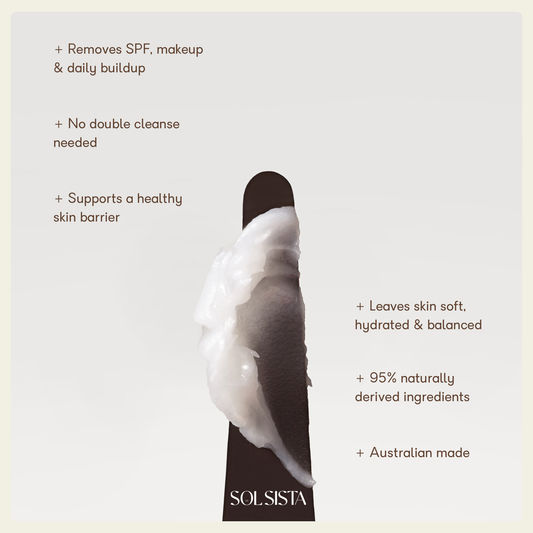
For our Refresha Balm™ Refresh + Reset Balm Cleanser, we made the intentional decision to work with suppliers using RSPO-certified palm-derived ingredients.
Because we believe meaningful change happens when brands actively support better systems, stricter standards, greater transparency and more responsible sourcing practices moving forward.
Rather than simply avoiding the conversation altogether, we believe participating in certified sustainable supply chains helps contribute to the ongoing push for stronger industry accountability and long-term change.
Because the future of conscious beauty isn’t about pretending these ingredients don’t exist.
It’s about helping encourage better ways of sourcing, regulating and improving them over time.
By supporting responsibly sourced and certified supply chains, we believe brands can help encourage the industry toward higher standards and more sustainable long-term practices.
Because simply avoiding palm oil altogether doesn’t necessarily solve the larger issue.
In many regions around the world, palm farming supports local economies, communities and families. And when properly regulated and responsibly managed, palm cultivation can exist within more sustainable agricultural systems without contributing to ongoing deforestation.
The goal shouldn’t be pretending palm oil doesn’t exist. Avoiding it, does not make it go away.
The goal should be creating stronger systems around how it’s grown, sourced and regulated.
And the more brands and suppliers participate in certified sustainable sourcing programs, traceability initiatives and stricter environmental standards, the more pressure there is for real industry-wide change to continue happening.
Palm-derived ingredients still play an important role in formulation
Palm-derived ingredients also play an important role in modern cosmetic formulation.
They help create beautiful textures, stability, cleansing performance and skin feel, while supporting the longevity and effectiveness of a product.
Palm oil itself is naturally rich in fatty acids and vitamin E compounds, making it an incredibly functional ingredient within skincare when thoughtfully and responsibly sourced.
What many people also don’t realise is that you often won’t actually see the words “palm oil” written directly on an ingredient list.
That’s because palm-derived ingredients are commonly processed into emulsifiers, surfactants, cleansing agents and texture enhancers that appear under completely different ingredient names.
Ingredients such as:
-
Glyceryl Stearate
-
Cetyl Alcohol
-
Stearic Acid
-
Palmitic Acid
-
Sodium Lauryl Sulfate
-
Sodium Laureth Sulfate
-
Cetearyl Alcohol
-
Decyl Glucoside
-
Lauryl Glucoside
-
PEG compounds
-
Vegetable Glycerin
-
Emulsifying Wax
-
Coco-Glucoside
Can all potentially be derived from palm oil depending on the supplier and manufacturing source.
And this is exactly why the conversation around palm oil is far more nuanced than many consumers realise.
Because palm-derived ingredients exist throughout a huge percentage of modern beauty, skincare, food and household products globally - including many products marketed as “natural” or “clean.”
Which is why the conversation often comes back to:
-
sourcing
-
farming practices
-
traceability
-
environmental management
-
labour conditions
-
and formulation transparency
rather than simply the ingredient alone.
Conscious beauty without the performative marketing
We don’t believe the future of beauty is about pretending certain ingredients don’t exist.
We believe it’s about:
-
responsible sourcing
-
ethical supply chains
-
traceability
-
efficient agriculture
-
transparent formulation
-
and creating high-performing products designed to genuinely support the skin
We also believe modern consumers deserve more transparent conversations around sustainability. Because in reality, sustainability is rarely black and white.
It’s an evolving journey of asking better questions, improving systems and making more informed choices over time.
And as a growing brand, we’re committed to continuing that work - learning, researching and evolving as better solutions become available.
Because conscious beauty should feel informed.
We are proud members of RSPO + we are excited you are on this journey with us.
Read more from the WWF here https://wwf.org.au/what-we-do/food/palm-oil/