What Does 100% Mineral Sunscreen Actually Mean?
Britt JamesWhat Does 100% Mineral Sunscreen Actually Mean?
Walk into any pharmacy or beauty store and you'll see the word "mineral" on a lot of sunscreen packaging. It's become a buzzword — shorthand for natural, clean, skin-friendly. But here's the thing. Not every product that calls itself mineral actually is one. And your skin deserves to know the difference.
Physical filters vs chemical filters
There are two types of UV filters used in sunscreen - physical and chemical. They both protect your skin from UV damage, but they work in completely different ways.
Physical (mineral) filters - zinc oxide and titanium dioxide - sit on top of skin and act like a shield, physically deflecting and scattering UV rays before they can penetrate. Chemical filters, ingredients like homosalate and octocrylene, are absorbed into skin, where they convert UV rays into heat and release it.
Neither is the enemy. But they work differently, they feel different on skin, and you deserve to know which one you're wearing - particularly if you've got sensitive or reactive skin, where that heat-conversion process from chemical filters can be more likely to set off irritation.
The 100% mineral standard
A true mineral sunscreen uses only physical UV filters - zinc oxide and/or titanium dioxide - and nothing else listed as the active ingredients. That's it. That's the standard.
The problem is that some products market themselves as "mineral" or "natural" SPF while still containing chemical UV filters alongside the zinc or titanium. That makes them a hybrid formula, not a true mineral sunscreen, regardless of how it's marketed on the front of the bottle. The only way to know for sure is to check the actives list yourself.
Nano vs non-nano - the difference that actually matters
Even within mineral sunscreens, there's a further distinction worth knowing: nano vs non-nano zinc oxide. Nano-sized zinc particles are used by some brands to reduce the white cast mineral sunscreen is known for and improve how it feels on skin. But there are genuine, ongoing questions around whether nano zinc can be absorbed into skin, and around its impact on marine ecosystems and reef health.
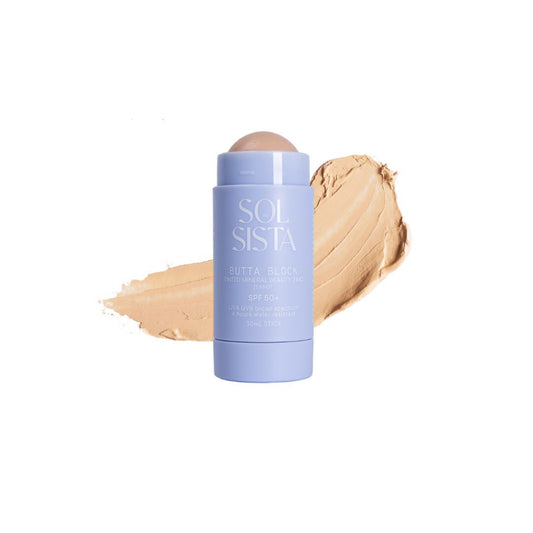
Non-nano zinc oxide sits on top of skin without penetrating it - the trade off is that it can leave more of a visible cast, which is part of why we formulate BUTTA BLOCK™ as a tinted mineral sunscreen rather than pretending that trade-off doesn't exist.
Why this matters more for some skin than others
If your skin is easily triggered — reactive, rosacea-prone, or generally sensitive - the type of UV filter you're wearing isn't a small detail. We've gone deeper into exactly why that is in Best Sunscreen for Sensitive Skin & Rosacea, if that's where your skin sits.
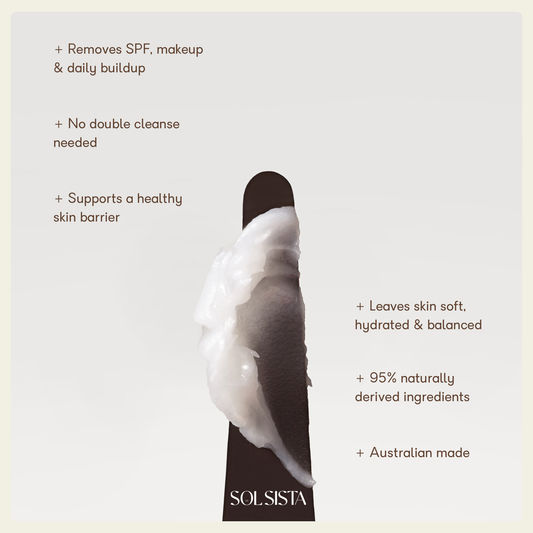
And once you've chosen mineral, there's one more thing worth knowing - mineral sunscreen needs a slightly different approach to actually get off your skin properly at the end of the day. We cover exactly how in How to Actually Remove Sunscreen From Your Skin.
FAQs
Does mineral sunscreen protect as well as chemical sunscreen? Yes — both physical and chemical filters are effective at blocking UV radiation when applied correctly and reapplied regularly. The difference is in how they interact with skin, not in their level of protection.
Why does mineral sunscreen leave a white cast? Because non-nano zinc oxide particles are large enough to sit visibly on top of skin rather than blending in invisibly. It's the same size and property that makes it non-penetrating and reef friendly.
Is nano zinc oxide unsafe? It's not classified as unsafe, but there are ongoing questions in the research around its absorption into skin and its impact on marine ecosystems — which is why we've chosen non-nano zinc in our formulas.